PredictWind - Marine Forecasts
- 4.7
- Rating
- 1.00M
- Installs
- Free
- Price

 Analysis by App-foxy
Marine weather is one of those things that looks simple until a small change in wind or visibility affects an entire day on the water. I found PredictWind - Marine Forecasts most useful when I treated it as a planning tool rather than a quick “will it rain?” app. It is built for people who need to think about wind, waves, and changing conditions before leaving shore, and that focus gives it a very different feel from the ordinary weather apps already installed on most phones.
My overall impression is positive: this is a serious weather app for sailors, boat owners, anglers, paddlers, and anyone whose plans depend on marine conditions. It can feel more detailed than necessary for a casual beach visit, but that extra depth is exactly why I would choose it for a trip where a poor forecast could mean discomfort, delay, or a difficult return. The free download makes it easy to test, although some of the more advanced value sits behind optional in-app purchases.
Why PredictWind feels different from a normal weather app
PredictWind Limited has clearly aimed this app at the water rather than simply adapting a land forecast to a coastline. Its store summary describes it as a leader in marine weather forecasts, and after using it, I understand the emphasis. The app encourages me to look beyond temperature and rain and consider the conditions that actually shape a passage: wind direction, wind strength, waves, and how those elements may change over time.
You May Also Like

 Blood Strike: 2.5 Anniversary
Blood Strike’s Loadouts Turn Every Drop Into a Tactical Gamble
A close look at Blood Strike’s custom loadouts: how fast access to signature weapons reshapes its battle royale rhythm, rewards preparation, and narrows the gap between fights.

 Pandora - Music & Podcasts
Pandora’s Music Is Easy to Start, but Harder to Recover
Pandora’s strength is its low-effort path from a seed to a station. Its weak spot is how much confidence it asks you to place in connection, setup, and quiet recovery.

 8 Ball Pool
 Is Built on Rivalries, Rematches, and Routine
A close look at the rivalries, rematches, shared routines, and unanswered safety questions that turn a quick pool match into a persistent mobile community.

 Samsung Music
’s Quiet Strength Is Playing What You Already Own
Its reach comes less from spectacle than from dependable access to a personal library. That simplicity is both the app’s strongest retention engine and its ceiling.

 AccuWeather: Weather Radar
AccuWeather Review: A Quick, Clear Forecast for Everyday Decisions
For everyday plans, the best forecast is the one you can understand quickly. AccuWeather makes rain timing, radar, and local conditions easy to act on, with a few trade-offs.

 Hill Climb Racing
Why Hill Climb Racing Still Turns Crashes Into One More Run
A tiny car, a bumpy hill and one more upgrade: Hill Climb Racing keeps resurfacing because its simple chaos makes every near-miss feel personal.
More From Our News Desk



That distinction matters in everyday use. A general weather app might tell me that the afternoon will be sunny, but sunshine does not tell me whether a small boat will face uncomfortable chop on the way home. PredictWind makes marine conditions the main subject, so the information feels more relevant when I am deciding whether to launch, when to leave, or whether a planned route is sensible.
The interface is not designed around instant simplicity. I had to spend time understanding what each forecast view was showing and how to move between locations and time periods. In return, I got a more deliberate way to inspect conditions. I would not open it merely to check whether I need an umbrella. I would open it before committing to time on the water.
That learning curve is the first important trade-off. People who want one large temperature number may find the presentation busy. People who already think in terms of wind windows and sea state will probably appreciate that the app does not bury those details beneath general-purpose weather information.
Reading the forecast as a planning workflow
I get the most from PredictWind when I use it in stages. First, I check the broad forecast for the area. Then I look at the wind pattern and wave conditions during the hours I expect to be out. Finally, I compare the departure and return periods rather than focusing only on the moment I leave. This last step is easy to overlook, but it is one of the most practical habits the app encourages.
A morning forecast can look comfortable while the return journey becomes much less attractive later in the day. By checking the whole outing, I can make a better decision about timing, distance, and whether to stay close to shelter. The app does not remove the need for judgement, but it gives that judgement more useful material to work with.
For a coastal trip, I would also check the forecast at the actual destination instead of relying on the conditions at the launch point. Nearby locations can feel very different, especially when the route crosses exposed water or moves around a headland. This is a small workflow change, but it prevents the common mistake of treating one local forecast as a complete description of a larger area.
Another useful habit is to check again shortly before departure. I do not regard an earlier forecast as a promise. Weather changes, and a responsible plan needs a final review. PredictWind works well in that role because it keeps my attention on the conditions that affect the trip instead of encouraging a quick glance at a generic daily icon.
Where the detail earns its place
The app is strongest when the forecast has consequences. A sailor planning a passage can use it to think about comfort and safety over the full route. A fishing trip can be adjusted around the most suitable period rather than the most convenient start time. A paddleboarding session can be kept close to shore when the wind makes a longer outing less appealing.
I also think it suits boat owners who are still developing their weather-reading habits. The information can help connect a forecast to a real decision: not just “the wind is stronger,” but “that wind will make the return leg harder than the outward leg.” The app does not replace experience, yet it can make the reasoning behind a decision more visible.
One non-obvious strength is that it changes how I think about time. General weather apps often encourage a day-by-day view, while marine planning needs a trip-by-trip view. I care about the sequence of conditions during my actual outing. A forecast that is acceptable at noon may be poor at four in the afternoon, and the app makes that kind of comparison feel central rather than secondary.
Another practical insight is to use the app to define a personal threshold before looking at the forecast. For example, I might decide that a short recreational outing is only worthwhile if the return conditions remain comfortable. That prevents me from being persuaded by a pleasant start while ignoring the harder part of the plan. PredictWind provides the detail, but my own limits still need to guide the decision.
The important limitation: information can become friction
My main criticism is that the app can ask more attention from the user than a casual weather check. Marine forecasts contain several moving parts, and a newcomer may not immediately know which information deserves priority. The richer view is valuable, but it can also create false confidence if someone reads numbers without understanding how they relate to the boat, route, skill level, and local geography.
I would be especially careful about treating a favorable forecast as permission to go. Conditions that are manageable for an experienced sailor may be unsuitable for a beginner, a small craft, or a tired crew. PredictWind helps me inspect the weather, but it cannot know my equipment, judgement, fuel situation, or ability to turn back. That limitation is not a flaw unique to this app; it is a reason to use marine forecasts responsibly.
The other point to consider is the difference between the free experience and the optional purchases. The app itself is free, and the listed in-app purchase range runs from $6.99 to $499 per item. That is a wide range, so I would not assume every user needs to spend money. I would begin with the free version, learn whether its forecast presentation fits my routine, and only then decide whether advanced tools justify the cost for my kind of boating.
That pricing structure makes more sense for users who plan serious trips than for someone checking conditions for an occasional picnic by the water. A professional or committed sailor may see specialized forecasting as part of trip preparation. A casual user may find that a standard weather service gives enough information without adding another purchase decision.
Who should use it, and who should choose something simpler?
I would recommend PredictWind to sailors who regularly plan around wind and waves, boat owners who want a dedicated marine perspective, and outdoor users whose route or comfort depends on changing water conditions. It is also a good fit for people who enjoy studying forecasts instead of relying on a single color-coded symbol.
It should appeal to users who want to compare conditions across several points in a trip. That is more useful than simply checking the marina or beach where they happen to start. If I am planning a route with a destination, a stop, and a return time, I want to examine each part rather than assume the whole journey shares one forecast.
I would not make it my first recommendation for a person who only wants a quick local forecast for walking, commuting, or gardening. In that situation, the marine focus may feel excessive. A simpler weather app will probably be faster and easier to understand. PredictWind earns its place when the water itself is the reason I need the forecast.
Beginners should also approach it with humility. The app can support learning, but it does not turn a new sailor into an experienced one. I would pair it with local knowledge, official warnings, sensible route planning, and advice from someone who understands the area. The best use of the app is to improve preparation, not to encourage risk-taking.
Everyday scenarios where I found it most useful
Imagine I am planning an early coastal paddle. The morning looks attractive, but I do not want to judge the trip only by the launch conditions. I check the wind for the period when I expect to be returning, then consider whether the route leaves enough flexibility to shorten the outing. If the later conditions look less comfortable, I can start earlier, stay closer to shore, or postpone the session. That is a much better decision than discovering the change halfway through the trip.
For a small fishing boat, I would use the app before loading equipment. The question is not only whether the weather is pleasant at the harbor. I would consider the open-water section, the time needed to reach the fishing area, and the conditions during the journey back. This approach can save effort as well as improve comfort: sometimes the best decision is to change the plan before spending time preparing the boat.
For a longer sailing day, I would revisit the forecast at several points rather than treating the first check as final. I would compare the planned route with the expected wind and waves, then keep an alternative in mind if the conditions become less favorable. The app is particularly useful here because it makes weather part of the route discussion instead of a separate task done once.
A less obvious use is deciding how ambitious an outing should be. I may still go out when the forecast is not perfect, but I can choose a shorter route, remain near a protected area, or avoid a demanding crossing. That is where the app becomes more than a yes-or-no tool. It helps me adjust the plan to the conditions instead of assuming the only options are going or staying home.
Practical advice before relying on it
When first opening the app, I would avoid trying to understand every available detail at once. Start with one familiar location and one realistic trip. Check the wind and wave conditions for departure and return, then compare what you see with what you actually experience. Over time, that process makes the forecast easier to interpret.
I would also keep the app updated. The current version is 5.5.2.1, and it runs on devices using Android 8.0 or later. That makes it accessible to many existing Android phones, although anyone using an older device should check compatibility before planning around it.
The app is rated for Everyone, which fits its general accessibility, but that should not be confused with risk-free use. The content rating describes who can use the software; it does not assess whether a particular boating decision is safe. I would still treat the forecast as one part of a broader preparation routine.
It has been available since March 17, 2011, and its audience has grown to over a million installs. The app also holds a 4.7 average from around twenty-nine thousand ratings, with roughly a thousand written reviews. Those figures suggest that it has found a substantial audience, but I would still judge it by my own needs because marine forecasting is a specialized category. A popular app can remain the wrong choice for someone who wants only a simple daily forecast.
One final tip is to separate forecast confidence from personal confidence. If the display looks detailed, I may feel more certain than the situation deserves. I try to ask a more useful question: “What would make me change this plan?” If the answer is a stronger wind, rougher waves, or an uncomfortable return window, I check those specific points before leaving. That keeps the app in its proper role as a decision aid.
My final verdict
PredictWind - Marine Forecasts is best understood as a marine planning companion, not a general weather shortcut. I like it because it makes me examine the conditions that matter on the water and think about the whole outing rather than just the departure. Its strongest qualities appear when I am comparing locations, checking the return window, or adapting a route to changing conditions.
The detail also creates its main weakness. Casual users may find the app more involved than they need, and newcomers must avoid confusing a sophisticated forecast with personal expertise. The optional purchases deserve careful consideration too, especially for occasional users who may not need advanced capabilities.
For me, the free app is worth trying if marine weather is a regular part of my plans. I would recommend it to sailors, boat owners, anglers, and paddlers who want more than a generic weather icon. I would skip it for ordinary land-based forecasts and choose something simpler when the water is not central to the decision.
Developed by PredictWind Limited, this is a focused tool with a clear purpose. It does not try to be everything for everyone, and that is its advantage. If I need to make a thoughtful plan around wind, waves, timing, and route choice, it gives me a stronger starting point than a standard weather app. If I only want to know whether I should carry a jacket, it is probably more app than I need.
FAQs for PredictWind - Marine Forecasts
01What features does PredictWind offer for marine forecasts?
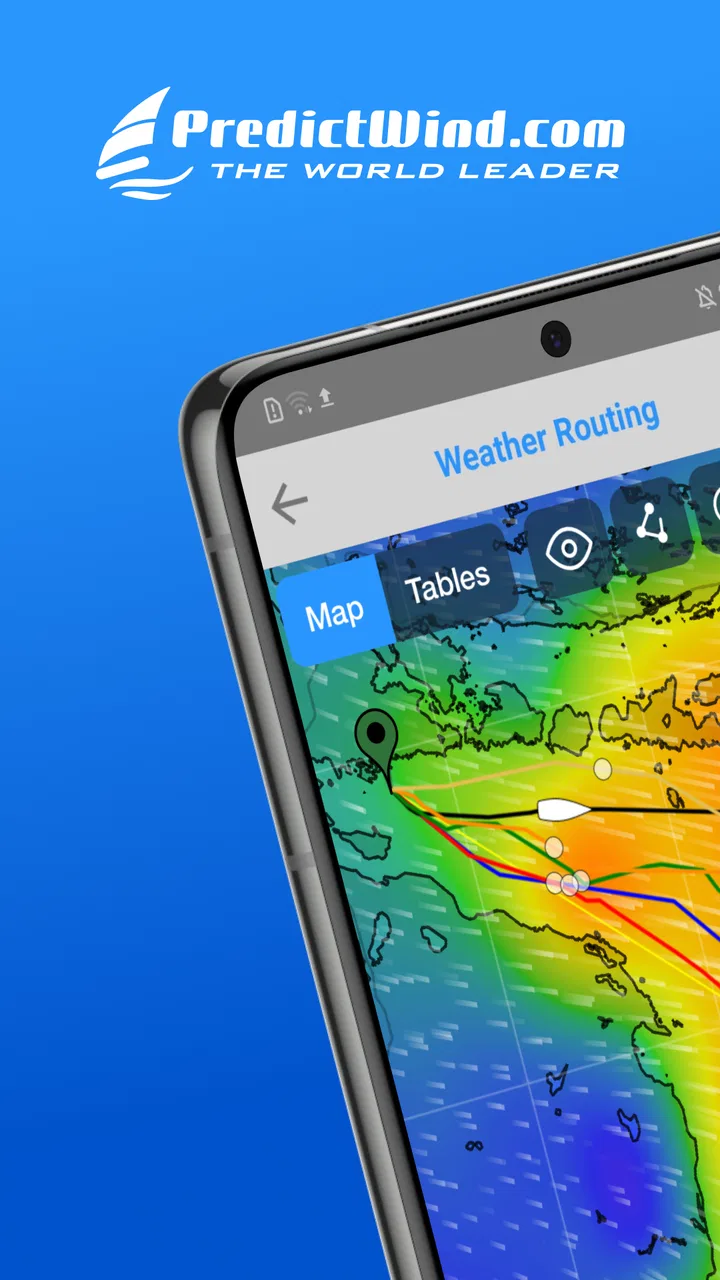
PredictWind provides high-resolution weather forecasts specifically designed for marine environments. It offers features such as wind maps, wave forecasts, and advanced weather routing. Users can also access real-time weather observations and alerts to ensure safe navigation. The app supports both basic and professional needs with customizable options to fit different types of sailing adventures.
02Can I use PredictWind offline?
Yes, PredictWind allows users to download forecast data for offline use. This feature is particularly useful for sailors who may not have reliable internet access while at sea. Before heading out, you can download the necessary forecast information to ensure you have access to crucial weather data at any time.
03Is PredictWind suitable for beginners in sailing?
PredictWind is designed to be user-friendly, catering to both beginners and experienced sailors. The app provides detailed tutorials and support to help new users understand how to interpret weather data. Its intuitive interface makes it easier for those new to marine forecasting to navigate and utilize the app effectively.
04How accurate are the forecasts provided by PredictWind?
PredictWind is renowned for its accuracy, utilizing advanced weather models and data from multiple sources. The app provides four forecast models, including two proprietary models developed in collaboration with top meteorologists. This multi-model approach enhances forecast reliability, offering users a comprehensive view of potential weather conditions.
05Are there subscription fees for using PredictWind?
PredictWind offers both free and paid subscription plans. The free version provides basic forecasting tools, while the paid plans offer advanced features such as high-resolution maps, detailed routing, and additional weather models. Users can choose the plan that best fits their needs, whether they require basic information or advanced navigation tools.
Pros
- Accurate and detailed marine forecasts.
- Multiple weather models for comparison.
- User-friendly interface with easy navigation.
- Customizable alerts for weather changes.
- Offline maps for areas with poor signal.
Cons
- Requires subscription for full features.
- Heavy battery usage during prolonged use.
- Occasional lag in map updates.
- Limited free version capabilities.
- In-app ads can be intrusive.

PredictWind - Marine Forecasts
Gallery